Decision Tree Analysis: Extracting Transparent Business Rules for Operational Policy Automation

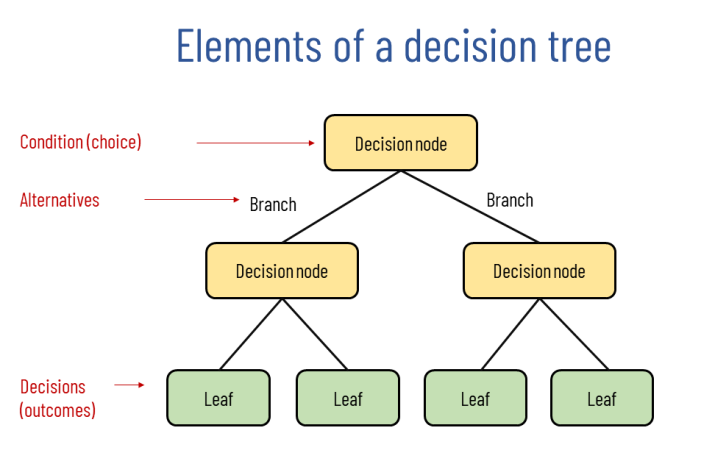
In many organisations, decision making resembles navigating a dense forest at dusk. The pathways exist, but without a map, teams often wander through choices without clarity. Decision Tree Analysis turns this forest into a lantern-lit trail, where each branch represents a visible step, and every possible route becomes a well-marked direction. Instead of obscured reasoning, leaders gain a clear view of how decisions form and where those choices lead.
The Mapmaker’s Approach to Logic
Decision Tree Analysis functions like a master cartographer who breaks down the terrain into smaller, interpretable paths. Rather than offering a textbook description of business analysis, it transforms complexity into a sequence of intuitive forks. This structured branching helps organisations move from instinct-driven answers to transparent, traceable rules. Students who explore modern problem solving through a ba analyst course often learn how decision trees simplify ambiguity by organising choices into visual patterns that anyone can understand.
As industries move toward automation-first strategies, this clarity becomes essential. Policy decisions once stored in scattered documents or team memory are now translated into logic that machines can execute without losing human intent.
Carving Out Rules That Machines Can Understand
A powerful aspect of decision trees is their ability to convert human reasoning into crisp, rule-based logic. Every split represents a deliberate question, and every outcome forms a defined instruction. This mirrors the way a craftsman chisels a sculpture out of raw stone, revealing sharp, predictable edges from what initially seemed abstract. Learners who take a business analysis course discover how this method helps operational teams replace informal judgement with codified and repeatable decision structures.
This transition also reduces dependency on tribal knowledge. When operational rules become machine-readable, processes scale effortlessly and no longer rely on the availability or interpretation of specific individuals.
The Story Hidden Within Each Branch
Every branch of a decision tree captures a narrative, whether it is customer eligibility, compliance verification or workflow approval sequencing. These branching stories help organisations understand not just what decisions were made, but why they were made. It is this narrative quality that makes decision trees invaluable for policy automation, especially in areas that demand accountability.
In many firms, the shift toward automated governance frameworks has made interpretability a critical factor. Leaders want systems that can justify their outcomes. Decision Tree Analysis supports this by making every choice part of a visible storyline that aligns with operational intent and regulatory expectations.
Removing Ambiguity from Policy Execution
When policies are written in dense manuals, interpretation becomes subjective. Teams may follow different versions of the same rule, creating inconsistency in operations. Decision trees eliminate this ambiguity by converting policies into precise, navigable structures. They highlight edge cases, reveal unnecessary complexity and help teams identify decisions that can be simplified or restructured entirely.
This level of clarity builds trust in automated systems. It ensures that technology does not become a black box but remains aligned with human understanding. In environments where accuracy and compliance matter, the ability to audit each decision path is a strong advantage.
Scaling Decisions for Enterprise-wide Automation
As organisations grow, so does the volume of decisions that must be made daily. Manual processing quickly becomes inefficient and prone to error. Decision Tree Analysis equips teams with a scalable foundation, allowing thousands of decisions to be executed consistently across channels. It becomes possible to integrate these trees into workflow engines, CRM systems and operational dashboards.
Teams trained through a ba analyst course often apply decision trees to simplify approval workflows, customer-facing rules and exception handling. Similarly, the structured logic gained from a business analysis course helps professionals embed these automated rules into enterprise systems with confidence, ensuring consistency even under heavy operational load.
Conclusion
Decision Tree Analysis transforms the wilderness of organisational decision making into a structured, illuminated pathway. It empowers teams to extract transparent business rules, strengthen operational policy automation and promote consistency across processes. Through branching logic, organisations gain a shared understanding of how decisions evolve and how they can be translated into functional, automated rules.
In a world where decisions are increasingly executed by digital systems, clarity becomes a competitive asset. Decision trees offer that clarity by bridging human reasoning with machine precision, enabling organisations to scale their operations with confidence and predictability.
Business Name: Data Analytics Academy
Address: Landmark Tiwari Chai, Unit no. 902, 09th Floor, Ashok Premises, Old Nagardas Rd, Nicolas Wadi Rd, Mogra Village, Gundavali Gaothan, Andheri E, Mumbai, Maharashtra 400069, Phone: 095131 73654, Email: elevatedsda@gmail.com.